
Dental implants (also known as implant placement or implant surgery) are the world's most advanced way to replace lost teeth: an implant post is placed right where the tooth is missing. The implant then fuses with the jawbone, creating a new tooth root that is as solid as a natural one and lasts permanently. With dental implants, you get 100% of your chewing function back and a visibly younger look.
1. The consequences of long-term tooth loss
Long-term tooth loss is quite common today and can have serious consequences. Yet many people, especially in middle age, still take it lightly and think it is normal. Missing teeth for years not only affects the look of your face but also your daily life:
- The neighboring teeth tilt toward the gap left by the missing tooth, making the teeth uneven and unattractive.
- The teeth around the gap also gradually weaken and become prone to decay, gum inflammation, pulp damage and more. As a result, people with long-term tooth loss often suffer from toothache and headaches, and bleed easily from everyday things like brushing or using a toothpick.
- It affects chewing: food is not chewed thoroughly, so the digestive system has to work harder to digest it, which over time can lead to stomach inflammation and pain.
- Long-term tooth loss leads to jawbone loss: the jawbone where the tooth is missing no longer receives pressure from chewing, so over time it shrinks. This leads to a sunken mouth, sagging soft tissue and a changed face shape. A sinus lift and bone graft is then needed before the implant can be placed.
2. Dental implants: the solution for long-term tooth loss
Dental implants are the best solution for people who have been missing teeth for a long time. An implant replaces a lost tooth by placing a titanium post in the jawbone. Unlike a traditional bridge, it does not affect the neighboring teeth, and unlike a removable denture, it does not cause bone loss or feel bulky and uncomfortable. This method works especially well for patients with long-term tooth loss and jawbone loss.
The procedure is as follows:
- The dentist examines you, takes a cone beam CT scan and uses software to assess your case and plan your treatment.
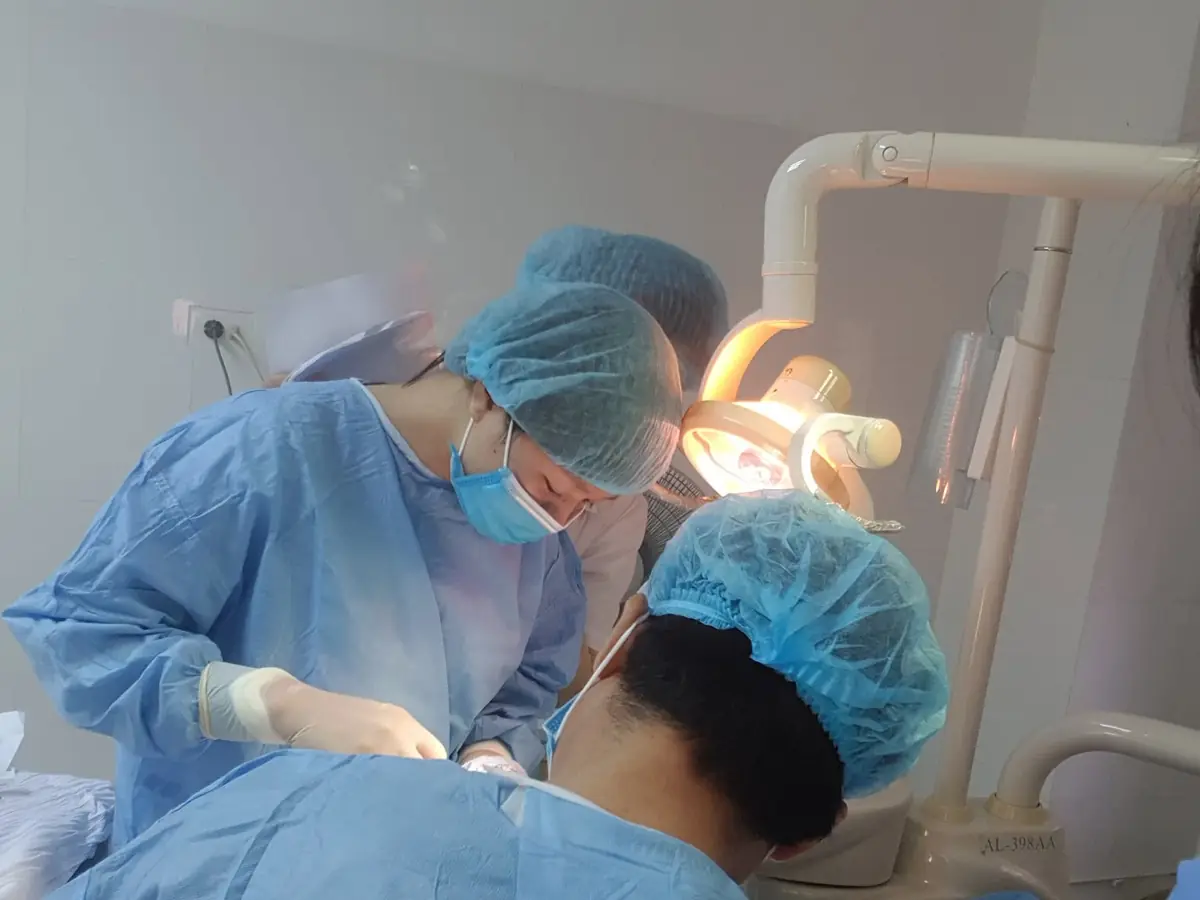
- Implant posts are placed in the jawbone. With 4 posts, the 2 front posts are placed straight and the 2 back posts at an angle. The dentist then fits a porcelain crown on top, shaped like a complete tooth.
- If the patient already has jawbone loss, the dentist may do a bone graft before placing the implant.
Dental implant treatment is a lifesaver for patients who have been missing teeth for years and whose jawbone is badly damaged. Traditional options such as dentures and porcelain bridges do not work well in these cases. Dental implants not only improve your appearance but also help improve your quality of life.
Full-arch implants
Full-arch implants are the most modern implant method available today for people who have lost all the teeth in one jaw. All the missing teeth in that jaw are replaced using 4 or 6 implant posts (known as All-on-4 or All-on-6), instead of the 9 to 12 implants used with conventional methods.
This gives you a natural-looking set of teeth on 4 or 6 implant posts, usually 10 to 12 teeth. It not only saves you money but also improves your chewing and gives you the best cosmetic result, for a confident smile full of life.